Skip to content
MenuClose

Venice

Things to Do in Venice

Which sights earn the time, what has to be booked before you leave, and how long the city actually needs.

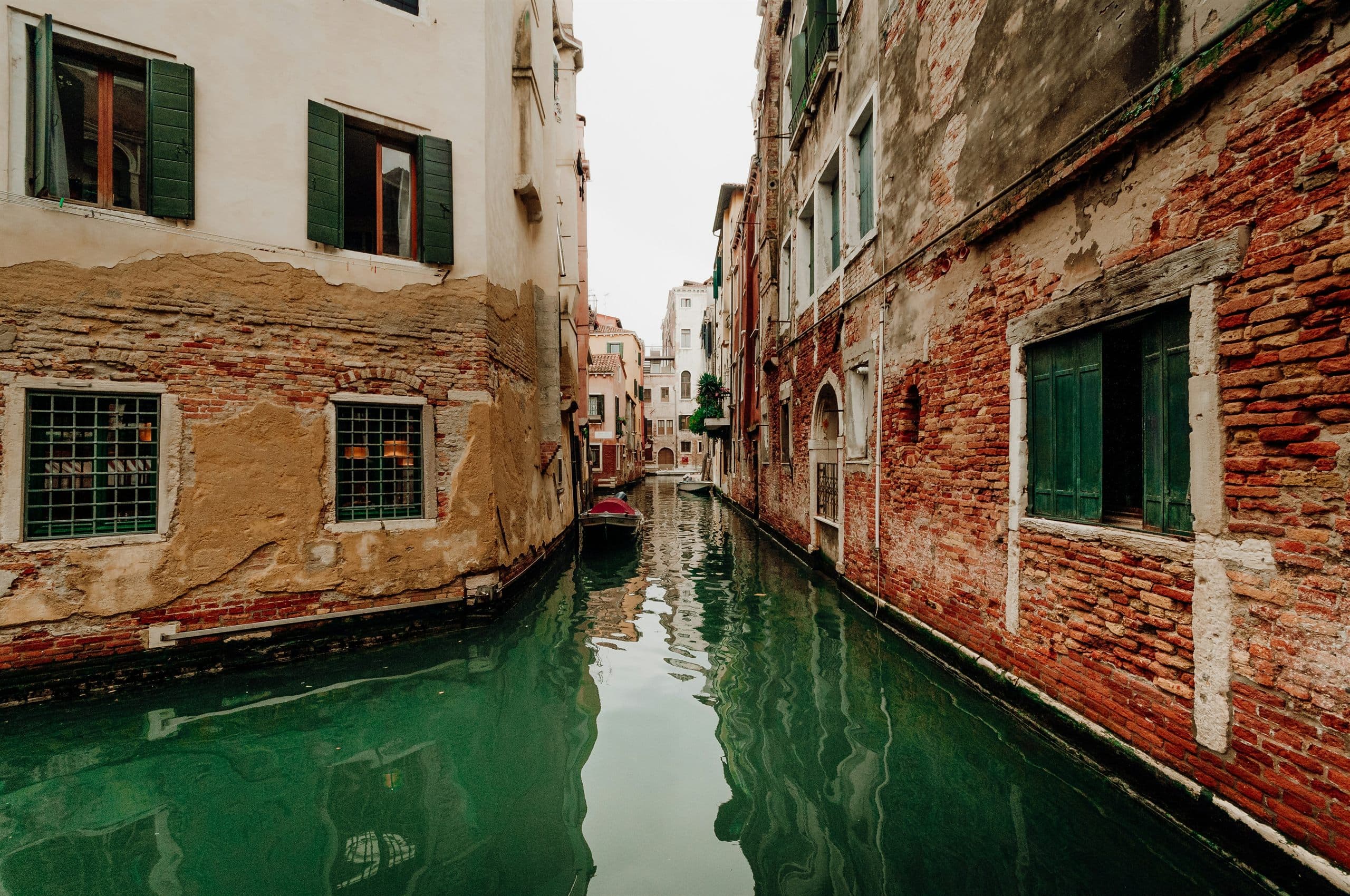
A narrow Venetian canal between brick and stucco walls, with green shutters, a small moored boat and a low water door at the waterline.
Most of Venice looks like this, not like the square.
On this page

Venice is small. You can cross the historic center on foot in well under an hour, and nothing in this article is more than a short walk or a single boat from anything else. That is the first thing to understand about it, and the reason most advice about Venice is the wrong shape: the constraint here is not distance.

The constraint is that the city concentrates almost everyone in the same few hundred meters, at the same few hours, and that walking it is slower than a map suggests — bridges, dead ends and canals that do not go where you want them to. A day built as a list of sights spends itself moving between them and queuing. A day built around two or three decisions does not. What follows is the smaller list: what is worth the time, what has to be arranged in advance, and what most people can comfortably skip.

How long Venice needs

Two full days is the honest answer for a first visit. That is enough for the two ticketed sights on St Mark’s Square, a view over the rooftops, a long walk through the quieter sestieri, and one trip into the lagoon — without any of it being rushed and without the day collapsing into a queue.

One day is possible and is a genuinely different trip. It works if you accept that you are choosing between the lagoon and the interiors rather than doing both, and if the one thing you want most is booked before you arrive. Three days is where Venice starts to reward you differently: not more sights, but early mornings and evenings in a city that empties out noticeably once the day visitors leave.

The single biggest variable is not how many days you have but whether you sleep in the historic center. Staying in the historic center gives you the early mornings and the evenings after many day visitors have left, which is worth more than an extra afternoon.

What to book before you go

Venice rewards very little advance planning, with one real exception. St Mark’s Basilica runs on timed online entry, and it is the thing to arrange first. The Doge’s Palace is softer: booking ahead is sensible, but a standard St Mark’s Square museums ticket without a reserved slot is admitted from midday, so an unbooked morning is the part that costs you. Its restricted-route tours are the exception within the exception — those genuinely require a reservation.

Everything else in this article — the churches, the walking, the food, the islands — can be decided on the morning. Book the basilica, hold a slot at the palace if you want a particular hour, and the rest of the trip stays flexible, which in a city this weather-dependent and this crowded is the more useful kind of planning.

What needs arranging in advance, and how each is best approached.
WhatBook aheadApproach
St Mark's BasilicaYes — timed entryIndependently; the interior rewards interpretation
Doge's PalaceSensible, not requiredIndependently; restricted-route tours are reservation-only
A view over the rooftopsYes — timed entrySt Mark's Campanile while San Giorgio Maggiore is closed
The Grand Canal by waterNoIndependently, on a public vaporetto
Scuola Grande di San RoccoNo — sold on siteIndependently
Cannaregio and Dorsoduro on footNoIndependently
Cicchetti and the bacariNoIndependently, or a guided crawl if you want the introduction
MuranoNoIndependently
Burano and TorcelloNoIndependently; it takes most of a day
A gondolaNoSituational — see below

The sights that earn the time

Three things on and around St Mark’s Square justify planning a day around them. Everything else in the piazza — the cafés with orchestras, the souvenir arcades — does not, and the square is more pleasant at seven in the morning than at any other hour.

St Mark’s Basilica

St Mark’s Basilica. The one thing in Venice that is worth arranging your day around. The interior is surfaced almost entirely in gold-ground mosaic, built up across centuries rather than decorated in one campaign, and it does not photograph in a way that prepares you for it.

It runs on timed online entry through the basilica’s own ticket shop, and the ticket is tiered: a basic admission covers the church, and separate or combined tickets add the Pala d’Oro, the museum and the Loggia dei Cavalli — the balcony with the four bronze horses, which is also the best place to stand above the square. The bell tower is ticketed separately again.

One scheduling detail is worth more than any other. On Sunday mornings until 2pm, and during services at any time, the only part open to visitors is the museum and the Horses Loggia — not the church itself. If Sunday is your only full day, plan the basilica for the afternoon.

Go independently; there is no logistical problem for a guide to solve. What a guide does add here is interpretation, and this is a building where that changes the visit — very little of what you are looking at explains itself.

The Doge’s Palace

The Doge’s Palace. The seat of the Venetian republic, and the more legible of the two — a building about how a state actually worked, which gives the rooms a logic the basilica does not need.

Its ticket is worth understanding before you buy. The standard admission is a St Mark’s Square museums ticket: one purchase covering the palace plus the Museo Correr, the National Archaeological Museum and the monumental rooms of the Marciana Library, all on the square. Whether you use the other three is up to you, but you are paying for them either way, and the Correr is a quiet place to sit down in a part of the city that offers few.

The palace also runs restricted-route tours through parts of the building the standard itinerary does not reach. Those are by reservation only and for limited numbers, so they are the one thing here that can genuinely be unavailable if you leave it late.

A view over the rooftops

A view over the rooftops. Venice is flat and dense, and it only resolves into a shape from above. There are two towers that do this, and at the moment only one of them is open.

On paper the better of the two is the bell tower of San Giorgio Maggiore, across the water on its own island. Its view back across the basin is the composition that contains St Mark’s, the palace and the campanile itself — which is the one thing the campanile cannot show you, because you are standing in it.

Access to the San Giorgio tower is currently suspended for extraordinary maintenance, with no reopening date announced. Check the abbey’s own site before you plan around it, because this is a closure rather than a permanent loss.

Until it reopens, the campanile in St Mark’s Square is the practical answer. It runs on timed tickets and the ascent is by lift, so it is a short visit to slot into a morning rather than a climb to build a day around.

Ride the Grand Canal once

Ride the Grand Canal once. Venice was built to be arrived at by water, and its main street is still water. The palazzi along the Grand Canal have their real fronts on the canal side — the doors, the steps, the decorated facades all face the boat rather than the alley behind. From land you mostly see their backs.

You do not need a tour for this and you should not buy one. A public vaporetto running the length of the canal does the whole thing for the price of an ordinary ticket, and it is the cheapest hour in Venice that changes how the city reads. Stand outside at the back if there is room; the seats are inside and the windows are not the point.

Which line, which ticket and whether a pass is worth it belong with the rest of the transport question, in Getting Around Venice.

The Venice away from the square

The crowd in Venice is unusually concentrated. A ten-minute walk in almost any direction from the piazza takes you into streets that are busy rather than overwhelming, and the difference is immediate enough to be worth planning for deliberately.

Scuola Grande di San Rocco

Scuola Grande di San Rocco. The best value-for-effort interior in the city, and the one most first visits miss.

Tintoretto began decorating it in 1564 and kept going for roughly two decades, filling the building with a single enormous cycle of paintings that are still in the rooms they were made for. That last part is what makes it worth the detour: almost nothing else of this scale survives in its original setting rather than redistributed into a museum.

Practically, it is the opposite of the basilica. Tickets are sold on site, there are no timed slots to reserve, and entry is usually quick. It is the thing to do on the afternoon a booking falls through.

Cannaregio and Dorsoduro

Cannaregio and Dorsoduro. The two sestieri that give you the city as a place people live rather than a site you are visiting, and the most useful unstructured hours you can spend here.

Cannaregio runs north from the station along a set of long straight canals and holds the Ghetto, the first quarter in Europe to carry that name. Dorsoduro, across the Grand Canal on the south side, is the university and gallery side of the city and stays open later in the evening than most of Venice does.

Neither needs a plan. Both reward getting lost on purpose, which in Venice is safe in a way it rarely is elsewhere — the historic center is an island, so you cannot walk out of it by accident.

Cicchetti and the bacari

Cicchetti and the bacari. The local eating format, and the most reliable way to eat well here without booking anything.

A bacaro is a small wine bar; cicchetti are the single plates and topped bread eaten standing at the counter with a small glass. You order a few, you move on, and the whole thing costs a fraction of a sit-down meal in the same street.

It is also the honest answer to the complaint that Venice is a tourist trap for food. The trap is real and it is concentrated in exactly the places you would expect — the square, the immediate approaches to the Rialto, anywhere with a photographic menu outside. The bacari are where the city eats around it.

The lagoon islands

The islands are the part of a Venice trip most often underestimated, because they are described as an excursion and planned as an errand. The boat is the slow part, and how slow depends entirely on which island you mean.

Murano

Murano. Roughly ten to fifteen minutes on the lagoon vaporetto from Fondamente Nove, which makes it the one island that genuinely fits into a half day alongside something else.

Glass has been made here since the furnaces were moved off the main islands, and the working demonstrations are the reason to come. Treat the sales floor that follows a demonstration as optional, because it is.

Burano and Torcello

Burano and Torcello. Burano is the one with the painted houses, and it is about forty-five minutes out on the same line, with boats through the day rather than on demand.

Ninety minutes of boat before you count any time on the island is what turns this from an add-on into a commitment. It is worth it — Burano does not look like anywhere else, and the color is a real thing rather than a photographic effect — but plan it as most of a day and not as an afternoon.

Torcello sits just across the water from Burano and is the oldest settled part of the lagoon, now almost empty. It pairs naturally with Burano, but not every boat on the lagoon line calls there and some connections run on request or on a separate short hop, so check the current timetable rather than assuming you can step off wherever you like. If you are already making the journey it is worth the detour; if you are not, it is not a reason to go.

Situational, not essential

A gondola. The most searched thing to do in Venice and the one this page is least willing to insist on. It is not transport. The city regulates it as a fixed-rate ride of about thirty minutes by day and about thirty-five at night, charged per gondola rather than per passenger, for up to five people — and that last detail is the one that decides it. Split across a group of five it is a reasonable thing to do once. Alone or as a couple you are paying the whole boat for half an hour, and the same canals are free to look at from the bridges above them.

If what you actually want is to be on the water, the public boats do it for the price of a ticket, and the Grand Canal ride above is the version of that worth planning for. What a gondola actually is, how the fares work and where the traghetto crossings run belong with the rest of the transport question, in Getting Around Venice.

Two more things people plan around that we would not. The Rialto Bridge is a bridge you will cross anyway; it does not need a slot in the day. And a day trip out to Verona or Padua from a two-day Venice stay spends the better part of both days on trains — if you have the time for that, the honest use of it is a third day here.

One thing that is not a sight at all but changes the trip: the city ran an access fee for day visitors on selected dates in 2026, charged to anyone arriving without an overnight booking. That trial ended on 26 July 2026 and the fee has not applied since. Whether it returns is a decision for the comune, so confirm the current position before you travel rather than assuming either way.